Showing posts with label Semiconductors & Electronics. Show all posts

Monday, 24 August 2020

Increased Usage in Scouting and Navigation Drives Night Vision Devices Growth

25 August 2020: The global night vision device market is expected to witness considerable growth on account of its increasing popularity among wildlife researchers and nature enthusiasts. Moreover, the technical feasibility and reasonable cost of providing security personnel with night vision devices that are capable of creating color images are driving the market growth. Night vision devices such as goggles are used in combat activities in navigation, the military sector, surveillance, and rescue operations.


Increased Usage of Goggles in Defense Sector Promoting Segment Growth

Based on type, the market is segmented into camera, goggles, scope, and others. Scope devices segment held the largest share of the market in 2018. Scopes are bigger and heavier than goggles and are mainly used as weapon sights. They offer better performance and the demand for scopes is relatively higher than goggles. It is mainly used for scouting and navigation purposes. 

Goggles are highly useful in versatile situations in military and during night operations, hence these find extensive usage in the defense sector across the world. There is a large emphasis on incorporating these along with Advanced Driver-assistance Systems (ADAS) for cars by automotive manufacturers. Another factor that could influence the growth of the market is night tours for photography, which is creating lucrative growth prospects for the segment.

In 2018, the camera segment held a significant share of the market and is expected to register a steady CAGR over the forecast period. Low maintenance and purchasing costs has resulted in the growth of the camera segment. Other factors promoting the growth of the market are the features of the product that include flexibility, lightweight, and detachability.

Based on technology, the night vision market can be segmented into thermal imaging, image intensifier, and others. Thermal imaging held the largest market share and accounted for a significant share in 2018. There are two types of thermal imaging devices, cryogenically-cooled and uncooled. Uncooled devices can operate at room temperature and are most commonly used. Cryogenically-cooled devices are highly susceptible to damage and are expensive.

Market Insights

Increasing popularity of night vision devices for applications in civil sector such as camping, construction sites, monitoring, and firefighting has benefitted the market in the past few years. High demand for advanced technologies such as thermal imaging and imaging intensifier in surveillance and security devices has propelled the growth of the market in commercial sector.

Leading companies in the night vision are mainly focusing on mergers and acquisitions, product developments, strategic partnerships, and business expansions in order to strengthen their position in the market. Some of the major companies in the night vision market are Harris Corporation; American Technologies Network Corporation; Raytheon Company; FLIR Systems, Inc.; Yukon Advanced Optics Worldwide; Firefield; Apresys, Inc., Bushnell; L3 Technologies, Inc; and Luna Optics. 


Wednesday, 15 July 2020

Easy Human Interaction in Shared Work Space Promotes Collaborative Robots

16 July 2020: Implementation of collaborative robots in automation has increased due to R&D involved in the use of these robots possessing embedded force and torque sensing technology. Interaction with humans in a shared workspace in physical world is a major reason for the development of collaborative robot or cobot. Growing investments in automation of manufacturing processes and adoption in the Small and Medium Enterprises (SMEs) are the major factors propelling the growth of the market. Emergence of robots working along with humans in areas like smart parts assembly and electronics product assembly further fuels the demand.

Collaborative Robots Market


Ability to Optimize Low Weight Collaborative Processes Drives Segment Growth

Based on payload capacity, the collaborative robot market is segmented into up to 5kg, up to 10kg, and above 10kg. In 2018, cobots with 5kg payload capacity segment held the largest share of the market due to flexibility and lightweight capacity of the machine to optimize low-weight collaborative processes such as picking, testing, and placing. Cobots above 10kg payload capacity are expected to witness a significant growth due to its capacity to handle bigger tasks requiring reliability, precision, and collaborating heavier-weight processes. 

The application segment is further categorized into pick and place, assembly, handling, quality testing, packaging, gluing and welding, machine tending, and others. The assembly application segment accounted for the largest market share in 2018 due to its ability of combining both easy and repetitive work along with more complex assembly processes.
Increasing application and adoption of pick and place collaborative robot is also an important factor driving the growth of the segment. Cobots are used in pick and place application to increase accuracy and reduce shrinkage while handling inventory across verticals. Pick and place robots are small in size and lightweight and hence can be deployed in limited space. 

Market Insights

There is a high demand for collaborative robots in various industrial applications due to their high payload carrying capacity. The cobots are required as an assisting device to humans and assist in increasing the efficiency, along with the quality of work done.

Cobots can work in collaboration with humans due to the development of next-generation of collaborative robots that are capable of moving, seeing, and reacting to the environment. This is largely responsible for high demand of cobots across several industry verticals along with logistics, leading to the growth of the market.

Some of the leading companies in the collaborative robots market are DENSO Robotics; ABB Group; EPSON Robots; F&P Robotics AG; Fanuc Corporation; MRK-Systeme GmbH; Energid Technologies Corporation; KUKA AG; Precise Automation, Inc.; Robert Bosch GmbH; Rethink Robotics, Inc.; and Yaskawa Electric Corporation. 

Wednesday, 17 June 2020

New Products Offerings in Industrial and Commercial LED Lighting to Spur its Growth

18 June 2020: The LED lighting technology offers high brightness and efficiency, has long lifespan, and high reliability than incandescent, high-intensity discharge (HID), and fluorescent lights. LED lights decrease the maintenance and operating costs and are also considered as environment-friendly lighting since they do not release harmful gases. LEDs release very less heat compared to compact fluorescent lights (CFLs) and incandescent bulbs. 

The industrial and commercial LED lighting retains high potential and rising demand for this LED lighting, mainly in emerging economies, is boosting its demand. Furthermore, companies in industrial and commercial LED lighting are accepting several innovative techniques to offer customers innovative and advanced product offerings.


Reducing Size of Traditional Lighting in Terms of Revenue and Units 

The major application variants of the industrial and commercial LED lighting market include architectural, outdoor, commercial, and industrial. Commercial lighting market estimated to account for more than half of the overall industry in 2014. Commercial application segment further includes hospitality, retail, buildings, education, warehouse storage, and office applications. The sector has observed high acceptance as a substitute to HID, incandescent, and fluorescent lighting.

The architectural application segment includes statues, illumination of building structures, landscapes and columns, digital signage, and other decorative features. Reducing the size of traditional lighting in terms of both revenue and units, and faster cost dropping of LED lights has inferences for its saturation in several application areas. 

The industrial sector is anticipated to be slow growing as compared to other counterparts on account of extensively used fluorescent technologies and high-intensity discharge (HID) with high performance. 

Furthermore, the outdoor application segment includes airport, industrial warehouse, government and healthcare corporate campus, municipal, and other non-public outdoor areas. Its demand can be affected by public rule interventions and municipality. 

Increasing demand for high resolution 10 mm billboards and signs, which are perfect for high-volume ordinary traffic sectors, and customizable content are expected to transform the outdoor display industrial and commercial LED lighting over the forecast period. 

Market Insights: 

The companies are focusing on improving technology by the growth of cost-efficient products with enhanced performance. Technology innovation, product development, and production optimization are crucial for industry participants to uphold a competitive edge. Leading players operating in the industrial and commercial LED lighting market include Philips Electronics; GE Lighting; Toshiba Corporation; Osram Opto; and Cree Inc.

Thursday, 30 April 2020

Impact Of Covid-19 On Professional Service Robots Market

30 April 2020:  When we hear the word robot, many of us picture human-like machines made of metal, but that's not always the case. A Robot can be referred to as a machine able to automatically perform a task or series of tasks based on its programming and its environment.

Before jumping onto professional service robots, we need to be familiar with the word robotics. Robotics is a sub-field of automation that combines several different disciplines, all aimed at creating tools that can perform tasks that are too time-consuming, risky, or need more precision than the average person can perform.


Now, as we are familiar with robotics. Let's hop on to professional service robots.

What is Professional Service Robots?

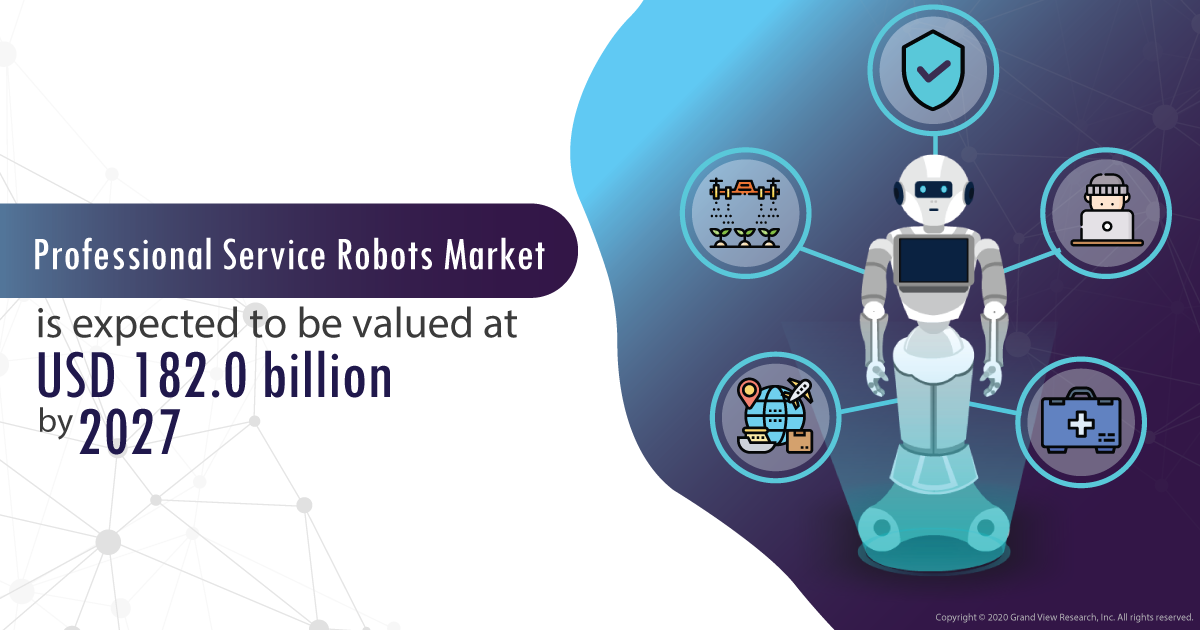
A professional service robot is a type of robot which is used within a professional environment to perform challenging tasks with higher reliability and efficiency by assisting humans rather than replacing them. They are either semi or fully-autonomous robots and are installed in difficult situations, such as space and defense sectors, agricultural applications, and demolition, to automate hazardous or laborious tasks. Professional service robots primarily find their use in the retail, hospitality, health care, and logistics industries. Lately, owing to the technological advances in the field of artificial intelligence and machine learning, motion control, and various other fields, the market for professional service robots has expanded. The global professional service robots market is expected to reach USD 182.0 billion by 2027, expanding at a CAGR of 41% from 2020 to 2027, according to a research by Grand View Research, Inc.

Uses Of Professional Service Robots
Professional Service Robots are used in a range of industries owing to their productivity. Few of its uses are:
Agriculture: Professional service robots are experiencing high demand in the agriculture sector owing to its capability to perform labor-intensive agriculture practices.

Defense: When used in the defense sector professional service robots primarily assist the military in combat scenarios. Its key job is to enhance a soldier's capability to neutralize the enemy. With the usage of professional service robots in defense, militaries gain an extra edge by giving its soldiers an advantage at the ground level.

Logistics: Professional service robots are primarily used in the logistics industry to move and store goods, to keep the supply chain moving. Professional service robots offer great productivity and efficiency by reducing manual labor.

Customer Service: Professional service robots that come in humanoid and non-humanoid forms are used in the customer service segment. Its key usage involves assisting customers in finding an item or completing a task. These robots are generally deployed in the retail industry to assist the customer.

Healthcare: In the healthcare sector, skilled professional service robots are used to boost the overall quality of patient care. It reduces the workload of medical staff, allowing them to spend more time directly caring for patients, while at the same time creating major operating efficiencies and reducing costs for healthcare services.

Along with these major usages, professional service robots also finds its usage in other segments such as space, construction, inspection, all of which are expected to augment the market growth in the future.

Applications Of Professional Service Robots

The automation of logistics is gaining momentum because of the customer-driven economy, which requires scalable and quick delivery of goods. Automated guided vehicles (AGVs) as the primary application in the logistics industry are used in warehouses to transport goods. These AGVs operate in a predefined pathway for moving and storing goods in the storage facilities. It reduces the timeline of product movement along with reducing the cost of logistics.

The numerous application of healthcare professional service robots include remote care robots, disinfectant robots to reduce hospital-acquired diseases, and robotic exoskeletons that provide external assistance and muscle recovery training. Recently, UVD Robots, a Danish company announced to ship its self-driving disinfectant robots to several hospitals in China to help fight the COVID-19 pandemic.

Defense professional service robots are custom made in different sizes and shapes according to the need of the organization. These tactically important robots serve the military by protecting and helping soldiers in numerous situations. Exoskeleton robots are one of the few professional service robots used in defense applications, these come in various forms to enhance strength and protect soldiers from strain injury. This growing demand for exoskeleton robots and Research & Development in the sector is expected to further propel the growth for the market.

Future Of Professional Service Robots
The future of professional service robots is on the rise owing to the technological advancements which can solve some of the biggest barriers the industry is facing.

The advancements in Artificial Intelligence and Machine Learning techniques can bring professional service robots much closer to the cognitive condition where they can interact with a human in a particular environment. Every step in the development of improving the natural language processing of professional service robots is significant. Apart from cognition, artificial intelligence allows humans to streamline back-end processes, respond to data-related problems, and meet compliance that helps humans to speed up customer service and carry out administrative tasks more efficiently.

The technological advancements in edge Artificial Intelligence (AI) chips which can run on a device without a cloud connection offers big benefits to privacy and speed as AI processing can happen on the device itself. These chips specifically designed for AI computations draw far less power for a given amount of processing, making it easier to fit the necessary number of chips into the design of a professional service robot.

Connectivity is one of the major challenges in the deployment of robots. Professional service robots require a stable and reliable connection whenever it needs to go mobile. Wi-Fi and 4G can't guarantee the quality of service plus 4G wireless networks can be expensive with excessive limitations. This is where the development of 5G technology excites the industry and can solve the issue with improved reliability, reduced latency, and increased connection density.

Impact Of Covid-19 On Professional Service Robots Market

As the number of people infected with the coronavirus continues to rise globally, it is expected to drive the market growth for professional service robots. The outbreak of COVID-19 has left the healthcare sector with staff shortages whereas the need for social distancing has left the service industry high and dry. Professional service robots can fill in the gaps in these sectors. Robots can be deployed in hospitals to minimize human intervention at any level. These robots can perform tasks such as Inspection, Cleaning, Security to assist the staff during this pandemic. For instance, medical professionals in the U.S. are using a telepresence robot that is equipped with a stethoscope which helps take vitals of the infected person. InTouch Health robot, which is fitted with a microphone and a camera communicates with the infected person and minimize medical staff's exposure to the disease.


Tuesday, 20 November 2018

Human Machine Interface (HMI) to Optimize of Industrial Processes

SAN FRANCISCO, November 20, 2018
Human-machine interface (HMI) is a user interface that connects user to machine or device. The interface includes hardware and software which enables user inputs to be interpreted as signals for machines, then provides required output to the user.

HMI technology is extensively adopted in various industries to optimize industrial processes. It reduces the manual efforts and helps to reduce throughput. HMI terminals are being increasingly implemented in various industries including packaging, automotive, oil and gas, healthcare, and aerospace and defense.


Software with Better Accessibility Will Drive Growth
HMI products are broadly categorized into display terminals, interface software, and industrial PCs. The display terminals are used in industrial automation systems along with interface software. Introduction of industrial internet of things (IIoT) are also driving demand for innovative displays. Traditional cathode ray tube (CRT)-based video terminals are being increasingly replaced with TFT-based capacitive displays. In addition, introduction of LCD, and LED-based UHD display are also expected to boost their application scope in the coming years.

Interface software is mainly used to exchange information across different components of computer system. Demand for interface software are expected to increase due to growing acceptance of PC-based open source controlling and monitoring systems. Productivity and quality can be improved by integrating analytics software with products. Software developers are concentrating on the development of the solutions that could provide greater access to information. For instance, Rockwell Automation has recently upgraded its HMI software. The newly added features in the FactoryTalk View software version 10.0 include new mobile device support and better cross-software integration to enhance productivity. The software is intended for monitoring and controlling distributed-server/multi-user applications. The new feature called TrendPro tool in FactoryTalk View Site Edition (SE) software can allow operator to connect alarm occurrences with data-point values to accelerate troubleshooting.

The industrial PCs are mainly used for process control and data acquisition. Industrial PC are expected to increase their demand with rising need for greater processing power and storage capacity.

Market overview
According to a report published by Grand View Research, Inc.; the global human machine interface (HMI) market is expected to accomplish a valuation of around USD 6.31 billion by 2025. Rise in adoption of industrial automation equipment in the manufacturing industry is expected to drive the market from 2014 to 2025. Advancements in HMI programming software with multi-vendor environment ability is anticipated to spur the market growth in the years to come.

However, high cost associated with installation coupled with lack of experienced staff can challenge the growth to an extent.

Some of the key companies operating in the human machine interface (HMI) market include Honeywell International Inc.; Eaton Corp.; Rockwell Automation Inc.; General Electric Co., and Emerson Electric Corp.


Wednesday, 25 July 2018

Online Content Platforms to Drive Smart TV Sales

The deluge of 3D movies and high-resolution entertainment in the form of sports and travel channels has created the demand for smart TVs. According to a study by Google, interested users relied on brand names and sizes to compare prices of TVs. Most of their searches were conducted from smartphones and desktops. Manufacturers have developed high dynamic range-based TVs for consumers prioritizing on resolution. In addition, major content providers and gaming platforms have adopted the technology, compelling TV manufacturers to integrate it with their latest offerings.


Economical Prices of TVs Take Precedence

Different types of smart TVs based on resolution in the market include 4K UHD TV, HDTV, Full HD TV, and 8K TV. The 4K UHD TV segment is anticipated to exhibit a robust growth rate over the forecast period (from 2018 to 2025) due to declining prices of smart TVs. Adoption of quantum dot technology and nanotechnology by major consumer electronics manufacturers can bolster segment demand. In addition, the advent of smart homes is also expected to play a huge role to spur the segment growth. In February 2018, Xiaomi, one of the biggest TV manufacturers, decided to capitalize on the trend by launching its product (Mi TV 4) for Indian consumers through its flagship stores and ecommerce partners. Low prices of these TV sets are enticing customers in buying them.

Future of Advertising

Online content consumption has gained traction due to the presence and growing popularity of over-the-top (OTT) providers such as Netflix. Smart TV manufacturers have been mulling over the possibility of displaying interest-based advertisements based on viewing history. For instance, Samsung is planning on launching its own content channel in the near future by partnering with OTT providers to offer content in desired resolutions.

Market Overview

The global smart TV market is expected to reach at USD 292.55 billion by 2025 growing at a CAGR of 9.5% from 2018 to 2025, according to a report by Grand View Research, Inc. Consumer preference towards LED and QLED TVs is anticipated to be the major disruptor in the industry. Availability of high-speed Internet and launch of streaming devices are predicted to drive the market growth over the coming years. Increased spending on consumer electronics would also influence market demand in the forthcoming years. Key market players include Sony Corporation; LG Electronics, Inc.; Samsung Electronics Co. Ltd.; and Panasonic Corporation.

Read more at:

Friday, 13 July 2018

Innovative Commercial Kitchen Equipment to Ease Cooking

Rapidly increasing number of commercial food outlets across the globe is anticipated to propel the demand for advanced commercial kitchen equipment, such as ovens and refrigerators. These equipment make it easy for chefs and cooks to fulfill consumer demands, in terms of food taste and cuisines.


New Induction Cooking Equipment to Offer Smart Cooking

Commercial kitchen equipment include induction cooktops, refrigerators, ovens, dishwashers, and several others. The refrigerators segment accounted for 45 % of the overall revenue share in 2016. On the other hand, induction cooktops segment would generate huge revenue in the coming years due to rising demand for energy-efficient kitchen appliances. Most of the companies aim at introducing new and innovative equipment for commercial kitchens.

For instance, Hatco Corp. recently launched a new range of induction-cooking equipment for commercial kitchens called Rapide Cuisine. The new countertop induction range offers low-profile design to support rigorous kitchen jobs. In addition, it also offers pre-set programming capabilities and high-resolution Thin Film Transistor (TFT) display screen to view and adjust cooking temperature. Presently, the company is delivering only single countertop or built-in models; however, it is planning to launch the double countertop units as well.

Market Insights

The global commercial kitchen equipment market is likely to reach USD 112.47 billion by 2025, according to a report by Grand View Research, Inc. Increasing demand for Quick Service Restaurants (QSR) among youth is likely to stimulate the growth of this market over the forecast years (from 2018 to 2025). Increasing number of travelers opting for staying in hotels is also expected to fuel the market development in the next few years. High demand for low-calorie and healthy food products is also likely to have a major impact on the commercial kitchen equipment market expansion.

Rapidly growing international café outlets and Fast Food Chains (FFCs) is anticipated to propel the market demand. Development of railways across various regions, due to rising demand for superior on board facilities, along with expanding tourism sector can also spur market growth. Some of the leading companies offering highly advanced commercial kitchen equipment are Garland Group, Inc.; The Vollrath Company, LLC; G.S. Blodgett Corporation; Middleby Corporation Company; and Bonnet International.

Read more at: 

Monday, 25 June 2018

Retail Automation to Revolutionize Shopping

Mom-and-pop stores have been a staple fixture to purchase all types of goods but with the exceeding demand for goods, retail chain outlets and supermarket chains came to rise. However, increasing population gave way to long waiting times at checkout counters causing inconvenience to customers. Automation aims to change that scenario by providing consumers with more power to ease their shopping needs. Retail automation utilizes various electronic devices and latest technologies to optimize processes in the retail sector. Advent of smartphones and Internet-of-Things (IoT) has encouraged retail stores to ditch legacy products for new devices to attract customers.


Emphasis on a Pleasant Customer Experience

Products used to automate processes and services include barcode and Radio-Frequency Identification (RFID), autonomous guided vehicles, electronic shelf labels, cameras, Point-of-Sale (POS), and others.

The barcode and RFID segment is likely to witness high demand over the forecast period (from 2018 to 2025) on account of the technology being integral in inventory management. The competitive edge it provides over e-commerce stores can also augment segment demand in the forthcoming years. Increasing demand for sophisticated retail services due to high living standards, particularly in developed regions, can bolster the segment growth.

The cameras segment is expected to exhibit a decent growth rate over the coming years due to security concerns regarding shoplifting and administrative errors. In 2017, Poly, a U.S.-based startup gained capital from private investors to provide novel security measures to identify individual customers. Using machine learning (ML) technology and security cameras, it can record shopping patterns to offer customized experiences.

Market Outlook

The global retail automation market valuation is projected to reach USD 19.17 billion by 2025, as per a report by Grand View Research, Inc. It is anticipated to expand at a CAGR of 8.7 % from 2018 to 2025. Increasing demand for technology to streamline processes in the retail sector is expected to be the key growth driver for the market. Adoption of automation across supermarket chains to lower the waiting time of customers is also likely to augur market growth over the forecast period. Self-serving kiosks, which can present new growth opportunities for the market, may also contribute toward its expansion. Prominent market players include NCR Corporation, Fujitsu Limited, Diebold Nixdorf, Incorporated, and ZIH Corp.

Visit @  https://www.grandviewresearch.com/industry-analysis/retail-automation-market

Ophthalmic Therapeutics/Drug to Cure Multiple Eye Disorders

Growing number of patients suffering from several eye-related disorders is anticipated to propel the demand for ophthalmic therapeutics/drugs. Such advanced products are safe and effective in treating different forms of eye disorders such as dry eye, glaucoma, retinal disorders, infection or inflammation, uveitis, allergies, etc.

New Eye Drop to Reduce Intraocular Pressure

Different types of ophthalmic therapeutics/drugs are anti-inflammatory, anti-infective, anti-Vascular Endothelial Growth Factor (anti-VEGF), anti-infective, and anti-glaucoma agents. The anti-infective drugs segment led the industry in 2016 on account of the factors such as rising cases of allergic conjunctivitis. In the coming years, anti-glaucoma agents segment is expected to be the fastest-growing segment. These agents can be bifurcated further into systemic and topical drops. Some of the drugs that can be used to treat glaucoma are brimonidine, timolol, epinephrine, metipranolol, dipivefrin, pilocarpine, latanoprost, bimatoprost, and carbachol.


The growth of this segment is attributed to the continuous advent of novel therepies with innovative mechanism of action (MOA). For instance, Aerie Pharmaceuticals recently introduced Rhopressa, its first product to cure open-angle glaucoma. The product reduces elevated Intraocular Pressure (IOP) in patients suffering from ocular hypertension or open-angle glaucoma. Another product from this company named Roclatan is expected to be under trails. When approved, it is predicted to be first-known glaucoma product to reduce IOP.

Market Insights

The ophthalmic therapeutics/drug market is likely to reach USD 35.7 billion by 2025, according to a report by Grand View Research, Inc. The market is also anticipated to witness a healthy CAGR of 5.1 % during the forecast period (from 2018 to 2025). Increasing number of private and public firms investing in R&D activities to develop more effective drugs is projected to stimulate the market growth in the coming years.

Growing cases of eye-related issues owing to increasing number of geriatric population is also expected to fuel market growth in the next few years. In addition, increasing adoption of safe and effective agents to cure various ophthalmic disease can also foster market expansion. Some of the leading companies offering safe and effective ophthalmic therapeutics/drugs are Pfizer Inc.; Novartis AG; Santen Pharmaceutical Co., Ltd.; Allergan; and Merck & Co., Inc.


Monday, 21 May 2018

Europium – Most Relevant Commodity in Consumer Electronics

Europium is a rare earth element (REE) with an array of applications in metallurgy, automotive devices, consumer electronics, and optoelectronic devices. Derivatives of europium available in the form of nitrates and oxides are used as doping agents to bond discrete elements. Discovery of REEs in Australia and Japan can bode well for sectors heavily relying on the metal. Methods in recycling consumer electronics are underway in China to extract REEs and reuse them for future production.


Advances in Research to Boost Europium Use

Major end users of europium include anti-counterfeiting, nuclear labs, semiconductors, consumer electronics, lighting, metallurgy, healthcare, automotive, and others. The consumer electronics segment is touted to exhibit a high growth rate due to increasing demand for wearables, smartphones, and 4K television sets. Increased customer budgets and improved connectivity due to advances in networking technologies are expected to significantly influence the segment demand. A group of researchers from the University of Buffalo has managed to successfully control energy levels between europium sulfide and tungsten diselenide when placed on a silicon chip.

The lighting segment is estimated to command a considerable demand of europium owing to increased usage of the element in mercury lamps. Transition to solid state lighting systems such as Light-Emitting Diodes (LEDs) by consumers coupled with a rise in infrastructural projects are expected to bolster the segment growth. In 2014, a group of researchers from reputed institutes succeeded in bonding europium with gallium nitride (GaN) with the help of oxygen. The combination can be used in powering red LED lights, as well as imaging techniques such as the Rutherford Backscattering.

Market Outlook

The global europium market is projected to reach USD 308.9 million by 2025, according to a report by Grand View Research, Inc. It is expected to experience immense growth from 2014 to 2025 (forecast period) thanks to the growing consumer electronics sector. Increasing demand for europium oxide and nitrates are likely to propel market demand during the forecast period. Applications of the element in material sciences, electrical, and energy sectors can increase the ambit of the market in the forthcoming years. Prominent market players include Canada Rare Earth Corporation, Lynas Corporation, Baotou Group, and China Minmetals.

In-depth research report on europium market, click the click below:

Friday, 23 March 2018

Matcha: Antioxidant and Vitamin-rich Ingredient

Matcha is a fine powder of green tea leaves. It is composed of high content of anti-oxidants, vitamins, minerals, and amino acids. It contains an exceptional class of antioxidant known as catechins. The catechin epigallocatechin gallate (EGCG) is found effective in prevention of cancer, cardiovascular diseases, type-2 diabetes, and other such diseases. The product is available in different grades such as classic, culinary, and ceremonial matcha.


Regular Tea is the Most Dominant Application

Matcha is increasingly being consumed as regular tea and is also used in food, beverages, and personal care products. In 2016, regular tea emerged as the largest application segment for matcha. Consumption of regular tea offers effective intake of nutrition-rich ingredients as well as energy stimulation.

Matcha also witnessed impressive rise in food segment is expected to grow rapidly in the forthcoming years. Growing demand for healthy food products is anticipated to impel demand for matcha in near future. The product can be used in various food recipes due to its bitter taste and malty flavor. It is also used for preparation of numerous food products including cakes, pastries, cookies, ice creams, cereals, chocolates, candies, and energy bars.

Increasing demand for low calorie drinks with detoxifying and energy boosting properties is likely to augment the demand for matcha from beverage sector. The product can be used in smoothies, lattes, mocktails, and juices. Increasing consumer fondness for healthy drinks has encouraged many cafes and beverage businesses to introduce matcha beverages.

Market Overview

According to Grand View Research, Inc.; the worldwide matcha market is projected to achieve USD 5.07 billion by 2025. Factors such as growing health consciousness and consumer awareness are some of the market driving factors. Prevalence of chronic diseases like obesity, diabetes, and cancer has increased the demand for healthy and nutritional food and beveragesubstitutes. This is anticipated to further boost the market during the forecast period (2014 to 2025).

In 2016, Asia Pacific accounted the largest share of overall market revenues owing to traditional tea culture in China and Japan.Some of the leading companies in the market are Ippodo Tea Co., Ltd., The AOI Tea Company, Midori Spring Ltd., AIYA America, and DoMatcha.

Visit at: https://www.grandviewresearch.com/industry-analysis/matcha-market

Friday, 16 March 2018

Industrial Displays to Ease Operational Difficulties for Manufacturing Companies

Growing necessity of simplifying complicated operational tasks in various manufacturing facilities is predicted to fuel demand for industrial displays. Proper monitoring of on-going operations through displays can help in reducing the downtime and enhancing workforce efficiency. Improved operational management is likely to leverage productivity and revenue generation of manufacturing companies opting for industrial displays.


Advanced Industrial Displays to Enhance Productivity

Major product-variants of industrial display are rugged, open frame, panel-mount, marine, and video wall. Panel-mount segment is expected to dominate the market in the coming years owing to easy availability, affordability, and wide range of applications. Such displays can be used by manufacturing companies to monitor operational activities. Growing necessity to enhance productivity in manufacturing facilities owing to increasing competition is anticipated to propel demand for advanced displays.

Considering the rising demand for industrial displays, most manufacturing companies are focusing on innovation in displays to offer better products in the market. For instance, Kontron recently expanded its human-machine-interface (HMI) solutions by introducing FusionView series. The monitors are likely to be based on frameless design, scratchproof front panel, and optional projected-capacitive (PCAP) multi-touch screen. In addition, users can also incorporate Wi-Fi connectivity to connect with existing networks. Availability of such advanced features in displays are expected to increase their demand in various end-use industries to monitor on-going operations and enhance productivity.

Market Insights

The industrial display market is likely to reach USD 7.26 billion by 2025, finds a report published by Grand View Research, Inc. High adoption of advanced industrial displays to replace obsolete push-button technology is poised to fuel market growth. High demand for multi-featured human-machine interface (HMI) devices can augment market expansion over the forecast period (2014 to 2025). Technological shift to high definition display devices with touch screens and growing adoption of the internet of things (IoT) is likely to bode well for market. Continuous upgrades in display screens with advanced technologies may further boost the growth of the market in the forthcoming years.

Some of the prominent players operating in the market are Japan Display, Inc.; Advantech Co., Ltd.;Samsung Display; LG Display Co., Ltd.; and WinMate, Inc.

In-Depth research report on industrial display market, click the link below:

Monday, 29 January 2018

Accurate Reading Becomes Easy with Smart Electricity Meters

A smart electricity meter is a device that enables consumers to monitor consumption of electricity in real-time. It can digitally send meter readings to energy supplier for generating accurate electricity bills. These meters can also encourage the consumers to turn off electric appliances when not in use to control their usage of energy. Thus, they can receive the lower electricity bills.


Moreover, smart meters require real-time two-way communications between meter and supplier. This can be done with the help of wireless communication or connection over fixed line. Smart meters are extensively used in residential, commercial, and industrial applications.

Integrated Smart Grid Operation System

In order to maximize customer satisfaction and minimize power outages, Trakya Elektrik Dagıtım A.S. (TREDAS) recently teamed up with General Electric (GE) to develop an integrated automation system. This system includes Distribution Management Systems (DMS) Remote Control, Outage Management Systems (OMS), and Supervisory Control and Data Acquisition (SCADA).

Remote control and remote powering can be accomplished for more than 730 centers using integration of systems in one operation. For instance, they have use a GE-commissioned TREDAS SCADA system, also called as remote control and monitoring system along with a Call Center, on-site mobile applications, and Geographical Information System (GIS).

Distribution transformers are observed remotely therefore an outage can be noticed immediately. If any power outage is observed, the monitoring system can generate instant alerts for consumers.

Market Overview

According to Grand View Research, Inc.; the global smart electricity meters market may surpass around USD 49.9 billion by 2025. Rising efforts from energy suppliers to reduce reaction time required to resolve power outage can drive the global market. Attractive schemes and favorable policies by different governments can further boost growth over the forecast period (2014 to 2025). Preference and endorsement of green energy and availability of able transmission facilities are also some of the vital market drivers.

Some of the leading companies in the market are Iskraemeco; Itron Inc; Holley Metering Ltd; General Electric Company; ABB Ltd, and Holley Metering Ltd.

To get free sample report:

Tuesday, 19 December 2017

Wearable Camera Manufacturers to Experiment with Design and Aesthetics to Boost Sales

Growing inclination toward sharing photos and videos through social media sites is creating a conducive environment for wearable camera technology to thrive. Wearable cameras are specially designed cameras for shooting videos with hands-free functionality. They are usually attached to an article of clothing such as a belt, harness, shirt, and helmet to create videos while the user is in motion.


Demand for Head-mount Cameras to Stay High through 2025

Wearable cameras can be of various types: body mount, head mount, smart glass, and ear mount. Head-mount cameras will be the most prominent segment throughout the forecast period (2014–2025). Their demand will be high for sports and adventure activities. Demand for body-mount cameras is gaining traction with manufacturers investing hefty funds into research and development. Several players are experimenting with the aesthetics of their products to boost sales. For instance, recently, Ubiquiti Labs released a new wearable camera, FrontRow, which is in the form of a necklace. The camera boasts a seamless touchscreen and user interface. It is developed on an Android-based operating system, which means continual developments and upgrades are possible to augment FrontRow’s functionalities.

Wearable cameras can be used in applications such as security, sports and adventure, industrial, and healthcare. The sports and adventure segment will be the leading segment throughout the same period. 

Market Insights

According to a report by Grand View Research Inc., the global wearable camera market is projected to rise at a tremendous CAGR of 18.19% between 2017 and 2025. Rising penetration of the Internet and proliferation of smart devices are likely to provide a fillip to the market. The growth of the market can also be attributed to increasing adoption of wearable cameras in applications such as healthcare, security, and sports and adventure. North America will be a key revenue contributor to the global market, thanks to the presence of a large number of manufacturers.

Some of the prominent players in the market are Xiaomi; Sony Corporation; GoPro Inc.; Vievu LLC; and Axon Enterprise, Inc.

To get free sample report at:

Rising Mining and Construction Activities Boost Utility Trucks Demand

26 November 2020: Utility vehicles are motorized vehicles that carry out a particular task more effectively than a passenger vehicle. Utili...